The Strategic Value and Future Outlook of LED Display Walls in Command & Control Centers
At the heart of the modern command center—the digital nexus for city management, energy, and public safety—lies a transformative technology: the LED display wall. It has shed its role as a mere display to become the pivotal decision-support platform. Globally, from the U.S. Pentagon to China’s Hainan Province, the superior clarity, stability, and integration capabilities of LED solutions make them indispensable for command and control. This is driving significant market expansion, with core applications like command centers projected to constitute nearly 60% of China’s Micro LED display market demand by 2025.
Core Value: The Quantum Leap from “Information Display” to “Decision Empowerment”
The high-pressure, decision-critical environment of command and control centers dictates that the core value of LED displays is concentrated in three key dimensions: Precision Delivery, Stable Operation, and Efficient Integration. This represents a fundamental leap beyond the functional boundaries of traditional display equipment.
Precision Delivery: Ultra-High-Definition Visuals for Informed Decisions
Ultra-HD and high-fidelity image quality provide a precise basis for decision-making. LED displays utilizing fine-pitch technology (P0.9-P1.5) achieve up to 99% color reproduction. Combined with a 7680Hz refresh rate and 14-bit grayscale processing, they can clearly render micro-scale airflow patterns in meteorological maps and millisecond-level parameter fluctuations in power grid operations. For instance, after deployment at a city-level traffic command center in Henan Province, monitoring detail recognition efficiency improved by 70%. Similarly, the P0.9 VAII LED video wall built by for the Hainan Emergency Command Center accurately displayed disaster simulation models during typhoon warnings, offering intuitive visual support for evacuation decisions.



Stable Operation: 24/7 Reliability as the Foundation
Round-the-clock stability builds the operational baseline, meeting the rigid “non-stop” requirement of command centers. The use of industrial-grade panels and redundant backup systems ensures stable performance in environments ranging from -15°C in mountainous highways to high-temperature, high-humidity coastal areas. In the Luanchuan-Lushi Expressway project, Pu LED displays achieved zero-failure operation under extreme cold. Furthermore, point-by-point calibration technology maintains 95% brightness uniformity even after 3,000 hours of operation, satisfying the long-term, high-load demands of clients like the China Meteorological Administration and China Railway.
Efficient Integration: Seamless Connectivity to Close the Decision Loop
Multi-system integration capability closes the decision-making loop by enabling seamless “Data-Visualization-Command” linkage. Through video controllers with nanosecond-level response, LED displays can synchronously integrate up to 64 signal sources—including surveillance cameras and drones—with a latency as low as 50ms. During emergencies, critical information can be retrieved instantly without switching sources. At the Henan Provincial Traffic Police Command Center, screen switching time was reduced from 3 minutes to 15 seconds, boosting emergency response efficiency by 80%. Solutions like Philips’ take this further by enabling deep integration with warning platforms, where abnormal data can trigger on-screen highlighting and audio-visual alerts, allowing operators to instantly identify the core issue amidst massive information flows.
Application Landscape: Widespread Cross-Sector Adoption and Scenario-Specific Technological Adaptation
Globally, LED display technology has become deeply embedded in four core areas: emergency management, energy dispatch, traffic control, and government command. This widespread adoption has led to a specialized application landscape where the technical strengths of LED solutions are precisely matched to the unique demands of each scenario.In the field of emergency management, the primary technological focus is on extreme environmental resilience.At the Hainan Emergency Command Center, a network of 34 large-format LED screens forms a closed-loop system for “Monitoring → Early Warning → Decision-Making → Dispatch.” These screens display real-time meteorological data under normal conditions, switch to disaster simulation models during alert periods, and transform into a central collaboration hub during active emergencies. This integrated system helped improve disaster response times by 30% during typhoon seasons.Meanwhile, an avalanche warning and command center in the European Alps utilizes LED displays with an IP68 protection rating. This ensures reliable operation and the precise delivery of rescue instructions despite constant exposure to heavy snow, ice, and freezing temperatures.
Energy & Transportation: Multi-Signal Coordination and Real-Time Dispatch.In the energy and transportation sectors, the focus is on multi-signal coordination and real-time dispatch.At the National Grid Longnan Power Dispatch Center, LED display walls consolidate real-time grid operations with emergency repair information, creating a visual “Dispatch Cockpit.” This integration has reduced fault diagnosis and response times by 40%.The traffic control center at Dubai International Airport utilizes an 8K ultra-high-definition LED screen to simultaneously monitor 120 signal feeds from runways, terminals, and cargo areas, increasing flight scheduling efficiency by 25%.
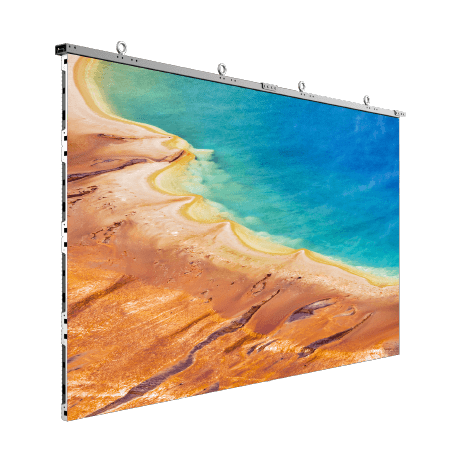
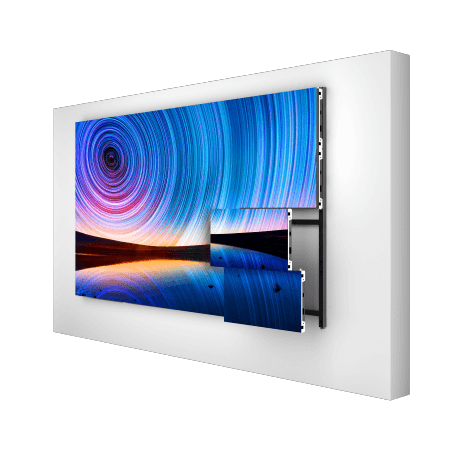
Government & Smart Cities: System Integration for Urban Intelligence.For government services and smart city initiatives, the priority is seamless system integration.The Xianyang High-Tech Zone Operation Command Center has leveraged fine-pitch LED screens to build a combined “Digital Reception Hall + Operation Hub.” This supports the implementation of the “Screen Valley China” strategy, enabling the simultaneous display and analysis of industrial data alongside urban governance information on a unified platform.Differentiated Solutions: Precision Matching for Every Scenario.Technical solutions are now precisely tailored to the needs and constraints of different command levels.For top-tier command environments like the Central Military Commission Joint Operations Command Center, extreme detail is paramount. Solutions like Leyard’s P0.4 Micro LED displays are selected, offering a 10000:1 contrast ratio to meet microscopic-level detail requirements.County-level command centers often opt for cost-effective, rugged solutions. Products featuring Qiangli Jucai’s GOB (Glue on Board) protection technology with an IP68 rating are preferred for their durability in outdoor or harsh environments.For small to medium-sized monitoring rooms, all-in-one LED video wall cabinets—such as those in Philips’ solutions—offer a compelling choice. Their integrated, modular design allows for rapid deployment and can efficiently interoperate with the main display wall in a central command hall.
Market Outlook: Driven by Policy and Technology, A Clear Path for Growth
Global LED display market for command and control centers is entering a dual-engine growth phase driven by policy mandates and technological iteration, with its scale set to expand continuously alongside the digital transformation of command systems worldwide. On the policy front, initiatives such as China’s “Ultra HD Video Industry Development Action Plan” and the EU’s “Digital Europe Programme” have prioritized the visualization upgrade of command centers, promoting the mandatory adoption of 4K/8K technologies in emergency response, transportation, and other key sectors. Meanwhile, major international projects like Saudi Arabia’s “NEOM” future city and smart city developments across Southeast Asia have already generated procurement demand for LED displays exceeding 10 billion RMB.

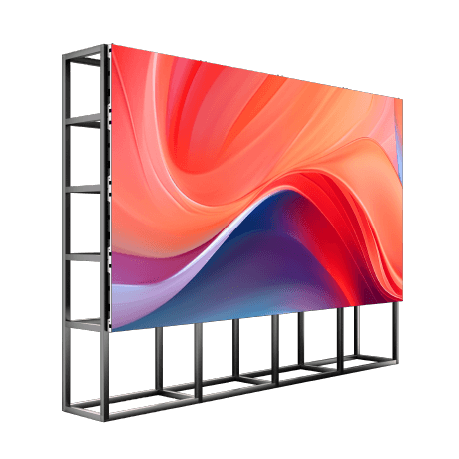
Technical Breakthroughs Unlock New Growth Potential.Micro LED pixel pitch has now reached below 0.4mm, and advanced COB integrated packaging technology has reduced the dead pixel rate to less than one in one hundred thousand, paving the way for ultra-large-scale command display arrays. The application of intelligent energy-saving technologies further lowers operational costs—dynamic power-saving systems can cut annual electricity expenses by 30% to 47%, saving approximately ¥27,000 per screen per year, which significantly increases procurement interest among small and medium-sized command centers. From a regional perspective, North America and Europe, with their mature emergency response systems, are primarily driven by upgrade and replacement demand, while Asia-Pacific and the Middle East, supported by ongoing smart city initiatives, have emerged as the core growth markets. The global LED display market for command and control centers is projected to surpass $20 billion by 2027.
Future Competition Will Center on “Integrated Solution Capabilities”.The era of simply supplying display hardware is over. Leading companies have now built full-chain competencies covering “hardware + software + services,” spanning from on-site scenario assessment and customized solution design to post-deployment rapid maintenance response within 72 hours, establishing clear competitive differentiation. As AI and LED technology continue to converge, “Smart Screens” capable of real-time data analysis and intelligent early-warning alerts will become the new standard. This evolution will position LED displays as the true “intelligent core” of command and control centers, driving the global command decision-making system toward greater efficiency and precision.
Dark Post Style with Image & Meta Info
-
Opps, No posts were found.
Social Share
We will give you the best choice to design your social share icon, text, position and many more.